
Osoby szukające możliwości rozpoczęcia gry od niewielkiej kwoty mogą sprawdzić kasyno online BLIK 5 zł i porównać dostępne opcje płatności. Warto zwrócić uwagę na minimalne depozyty, warunki bonusów oraz zasady wypłat przed wyborem konkretnej oferty.
Osoby szukające atrakcyjnych ofert mogą sprawdzić kod promocyjny kasyno bez depozytu 2026, aby poznać dostępne bonusy i najważniejsze warunki ich wykorzystania. Zestawienie pomaga łatwiej porównać promocje kasyn online dostępne dla graczy w Polsce.
Osoby szukające atrakcyjnych promocji mogą sprawdzić kasyno z bonusem na start bez depozytu 2026, porównując dostępne oferty i ich warunki. Warto zwrócić uwagę na wymagania dotyczące aktywacji bonusu, obrotu oraz wypłaty wygranych.
Osoby zainteresowane grą online mogą sprawdzić najlepsze europejskie kasyna online 2026, porównując dostępne opcje pod kątem oferty, metod płatności i warunków bonusów. Taki przegląd ułatwia ocenę rynku oraz wybór serwisu dopasowanego do potrzeb polskich graczy.
Dla osób ceniących sprawne transakcje przygotowaliśmy zestawienie ofert, w którym szczególną uwagę poświęcono kasynom z natychmiastową wypłatą. Ranking uwzględnia szybkość realizacji przelewów oraz najważniejsze warunki wypłat obowiązujące w 2026 roku.
Osoby szukające korzystnych warunków gry mogą sprawdzić kasyno z najniższą wpłatą, aby porównać dostępne opcje i minimalne kwoty depozytu. Warto również zwrócić uwagę na metody płatności, bonusy oraz przejrzystość warunków przed wyborem konkretnej oferty.
Osoby szukające atrakcyjnych ofert mogą sprawdzić 10 zł bez depozytu bonus kasyno 2026, aby poznać najważniejsze zasady korzystania z tego typu promocji. Warto również zwrócić uwagę na warunki bonusów, wymagania dotyczące obrotu oraz legalność operatora przed rozpoczęciem gry.
Osoby szukające atrakcyjnych promocji mogą sprawdzić 100 zł bez depozytu w kasynie i dowiedzieć się, jakie warunki obowiązują przy tego typu bonusach. Warto porównać dostępne oferty oraz dokładnie zapoznać się z zasadami ich wykorzystania.
Jeśli interesują Cię kasyna z bonusem 20 zł bez depozytu, warto sprawdzić dostępne oferty oraz najważniejsze warunki promocji. W poradniku znajdziesz również informacje o niskich wpłatach i płatnościach BLIK.
Dla osób szukających atrakcyjnych promocji warto sprawdzić kasyno bez depozytu 2026, gdzie zebrano informacje o bonusach oraz dostępnych metodach wpłat. To przydatne źródło dla graczy zainteresowanych ofertami z bonusami 40–100 zł i niskimi kwotami pierwszej wpłaty.
Osoby szukające atrakcyjnych promocji mogą sprawdzić 50 zł bez depozytu w kasynie i dowiedzieć się, na jakich zasadach działają tego typu bonusy. Warto również zwrócić uwagę na warunki promocji oraz dostępne gry przed podjęciem decyzji.
Dla osób szukających atrakcyjnych promocji warto sprawdzić 10 zł bez depozytu bonus kasyno 2026, zwracając uwagę na zasady aktywacji oraz warunki wypłaty. Takie zestawienie ułatwia porównanie dostępnych ofert i wybór promocji dopasowanej do własnych oczekiwań.
Osoby szukające atrakcyjnych promocji mogą sprawdzić 100 zł bez depozytu w kasynie, zwracając uwagę na aktualne warunki oraz wymagania bonusowe. Warto porównać dostępne oferty i dokładnie zapoznać się z zasadami ich wykorzystania.
Osoby zainteresowane promocjami kasyn online mogą sprawdzić kasyno 100 zł bez depozytu 2026, aby poznać najważniejsze informacje dotyczące bonusów i warunków rejestracji. Warto również zwrócić uwagę na kwestie legalności oraz wymagania związane z wykorzystaniem dostępnych ofert w Polsce.
Dla osób szukających atrakcyjnych promocji warto sprawdzić 20 zł bez depozytu bonus kasyno 2026, aby poznać najważniejsze zasady takich ofert. Przewodnik przedstawia kluczowe informacje dotyczące warunków bonusów i ich wykorzystania.
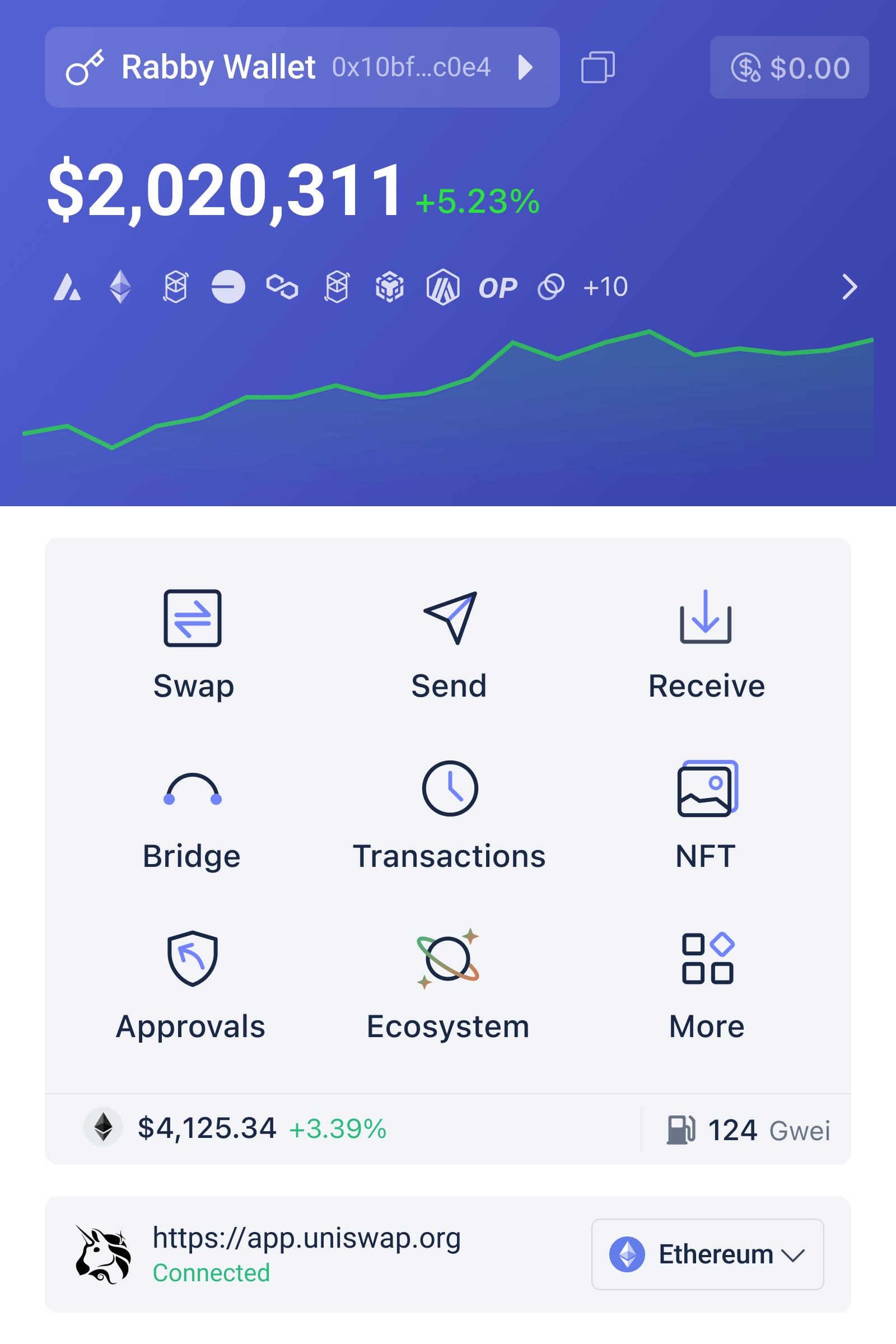
You are about to supply liquidity on Arbitrum from a German bank-funded crypto account. The decentralised application shows a familiar approval request, the wallet displays a contract address, and the final click appears routine. Yet one small misunderstanding can change the outcome: a wallet does not merely “send coins”. It signs instructions that may approve an unlimited token allowance, exchange assets at an unfavourable price, or interact with a contract whose behaviour is difficult to read from raw calldata. This is where Rabby’s browser wallet becomes interesting. Its central promise is not that DeFi becomes harmless, but that more of the transaction’s intended effects become visible before the private key is used.
For multi-chain users, that distinction matters. Rabby is a non-custodial wallet designed for DeFi and developed by DeBank. It supports more than 140 EVM-compatible networks, including Ethereum, Polygon, Arbitrum, Optimism, Avalanche, Base and BNB Chain. The practical challenge is not simply holding assets on many networks; it is maintaining a correct mental model while moving between different applications, bridges, gas markets and contract systems. A wallet that reduces avoidable confusion can therefore be valuable. But its warnings and simulations must be understood as analytical tools, not as an oracle of future certainty.
What transaction simulation actually does
In an EVM ecosystem, a transaction is an instruction sent to a blockchain account or smart contract. It can transfer tokens, call a swap function, change a lending position, or grant a contract permission to spend tokens later. Before signing, Rabby performs a pre-execution simulation and presents the expected changes to token balances. Conceptually, this resembles asking an execution environment: “If this call were processed against the current state, what would it change?”
That mechanism is more informative than a conventional confirmation window showing only a destination address and a gas estimate. A swap may be represented internally by several contract calls, including a token approval, a router interaction and a settlement step. The simulation attempts to translate those calls into consequences that a person can inspect: which asset leaves the wallet, which asset should arrive, whether a position changes, and whether a permission is created. The key conceptual improvement is to move attention from the transaction’s technical syntax to its economic effect.
This is especially useful because token approvals are not the same as token transfers. An approval can authorise a spender contract to move tokens in the future, sometimes up to an effectively unlimited amount. The wallet’s integrated security engine also checks for signals associated with phishing, known exploits, suspicious addresses and infinite approvals. These checks can interrupt a common behavioural failure in DeFi: approving a request simply because it appears as the first step in a familiar interaction.
Rabby’s automatic network switching addresses a different class of error. When a decentralised application requires a particular chain, the wallet can detect the required network and switch to it, reducing manual changes between Ethereum, an L2 and other EVM networks. That convenience is useful, but it should not be confused with economic safety. Being on the correct chain does not prove that the dApp is authentic, that the contract is well designed, or that the quoted exchange rate is acceptable.
The important boundary: a simulation is conditional
The most important limitation is also the easiest to overlook. A simulation is a forecast under a particular state and set of assumptions. Blockchain state can change between simulation and inclusion. Another trader may consume liquidity, an oracle may update, a contract may reach a new block-dependent condition, or a transaction may be reordered. On volatile markets, a reassuring preview can therefore become less accurate as the gap between review and execution grows.
Simulation also cannot repair a flawed economic decision. If a user intentionally deposits assets into a risky lending market, the wallet may accurately show the resulting balance changes while saying little about insolvency risk, governance capture, oracle design or liquidation mechanics. Nor does a clean preview establish that the website itself was reached through the correct domain. A malicious interface can present a transaction whose technical effects are clear but whose purpose is deceptive. Users still need to verify the dApp, contract context, asset symbol and requested permissions.
This suggests a useful three-layer model for wallet security. The first layer is identity: am I interacting with the intended website, account and contract? The second is execution: what calls will the blockchain process, and what balances or permissions are expected to change? The third is economics: is this trade, bridge, deposit or loan sensible given price impact, fees, counterparty risk and market conditions? Rabby is strongest in the second layer and can support parts of the first. It cannot decide the third layer for the user.
That boundary is not a weakness unique to Rabby. It follows from the structure of smart-contract systems. A wallet can inspect a transaction, but it does not control every future state transition of the protocol. Even open-source software, such as Rabby’s MIT-licensed codebase, benefits from community inspection without becoming automatically bug-free. Transparency improves the possibility of review; it does not guarantee that every dependency, release, browser environment or user device is secure.
Why Rabby fits multi-chain DeFi, and where convenience has a cost
Rabby’s value proposition is clearest for users who regularly move across EVM networks. Integrated bridge routes through protocols such as LI.FI can make cross-chain transfers available within the wallet interface, while the built-in swap aggregator can compare routes involving decentralised exchanges such as Uniswap and 1inch. A Gas Account feature may also allow network fees to be paid with stablecoins such as USDC when the user lacks the native token required by a chain.
These features solve real friction. A person who holds USDC but no ETH on a particular network is less likely to become stuck at the final confirmation step. Automatic network selection reduces one source of operational error. Route aggregation can expose alternatives that a single exchange interface would not show. Yet each abstraction hides something: bridge transactions introduce additional protocol and routing risk, aggregators depend on the quality of their available routes, and paying gas in a stablecoin still requires a service mechanism and may involve conversion or eligibility conditions. Convenience should reduce mistakes, not reduce attention.
The same principle applies to hardware-wallet compatibility. Rabby can work with devices such as Ledger, Trezor and OneKey, placing private-key use behind a separate signing device. This materially improves protection against some forms of malware and browser compromise, but it does not make a user immune to signing a bad transaction. A hardware wallet can protect the key while faithfully signing an approval for the wrong contract. The best setup is therefore not “hardware versus software”; it is clear transaction review plus isolated signing, especially for meaningful balances.
Local key storage reinforces Rabby’s non-custodial design. Private keys are kept on the user’s device rather than transmitted to Rabby’s servers, and core signing functions are intended to remain usable even if Rabby’s backend services are unavailable. That separation is important: the wallet acts as an interface and independent reviewer rather than a custodian that creates or changes transactions on the user’s behalf. It also transfers responsibility to the user. Device backups, phishing resistance, seed-phrase handling and browser hygiene remain decisive operational controls.
A practical review method for German DeFi users
Before signing, begin with the asset movement rather than the button label. Ask what leaves the wallet, what should arrive, and whether any approval remains active afterward. Then inspect the network, the recipient or spender, the expected slippage and the gas cost. For a bridge, add a separate question: what protocol or route takes custody of the assets during the transfer, and what happens if the route fails or is delayed?
For routine transactions, a simulation may provide a fast and useful plausibility check. For a new protocol or a large position, slow down. Compare the displayed contract with the project’s independently verified information, use a hardware wallet, consider a limited approval instead of an unlimited one, and test with a small amount where practical. A warning is a reason to investigate, not necessarily proof of fraud; the absence of a warning is not proof of safety.
Rabby Points, earned through activities such as swaps, gas funding or referrals, should also be treated as a loyalty mechanism rather than a security feature. Incentives can encourage experimentation and engagement, but they can also create a subtle pressure to transact more frequently than a user’s risk plan justifies. In DeFi, a reward for activity does not necessarily compensate for smart-contract exposure, slippage or bridge risk.
What to watch as wallet interfaces evolve
The recent positioning of Rabby as a broad wallet for Ethereum and EVM networks reflects a wider direction in the sector: wallets are becoming transaction interpretation layers, not just key containers. If simulations become more legible and cover more complex contract interactions, users may be able to evaluate DeFi actions without decoding every function call. The critical signal will be whether these explanations remain transparent about uncertainty, data sources and unsupported cases.
For now, the defensible conclusion is narrower and more useful. Rabby can improve the quality of a signing decision by showing expected balance changes, flagging certain risks and reducing multi-chain friction. It cannot establish that a protocol is solvent, a bridge is trustworthy, a price will remain available, or a website is genuine. Readers who want to evaluate the interface can start with the rabby wallet extension, but should treat installation as the beginning of a security process, not its conclusion.
Frequently Asked Questions
Does Rabby transaction simulation guarantee that a transaction is safe?
No. It shows expected effects under a simulated blockchain state and can reveal suspicious approvals or unexpected balance changes. It cannot fully predict later state changes, contract failures, malicious websites, market movements or the economic quality of the transaction. Use it as a review layer alongside domain verification and protocol research.
Is Rabby a custodial wallet?
No. Rabby is presented as non-custodial, with private keys stored locally on the user’s device rather than sent to Rabby’s servers. This means the user retains signing authority, but also bears responsibility for seed-phrase protection, device security and recovery procedures.
Is Rabby useful if I use a hardware wallet?
Yes. Rabby supports hardware wallets including Ledger, Trezor and OneKey. The hardware device protects the private key, while Rabby can provide a more informative transaction review. The combination is strongest when the user still checks the contract, network, approvals and expected asset movements before confirming.
Najnowsze komentarze